

Opportunities for Livestock Development Based on Market Signals
In 2025, Vietnam’s livestock sector aims to increase its total production value by approximately 4–5% compared to 2024. Livestock is expected to account for 28–30% of the total agricultural output
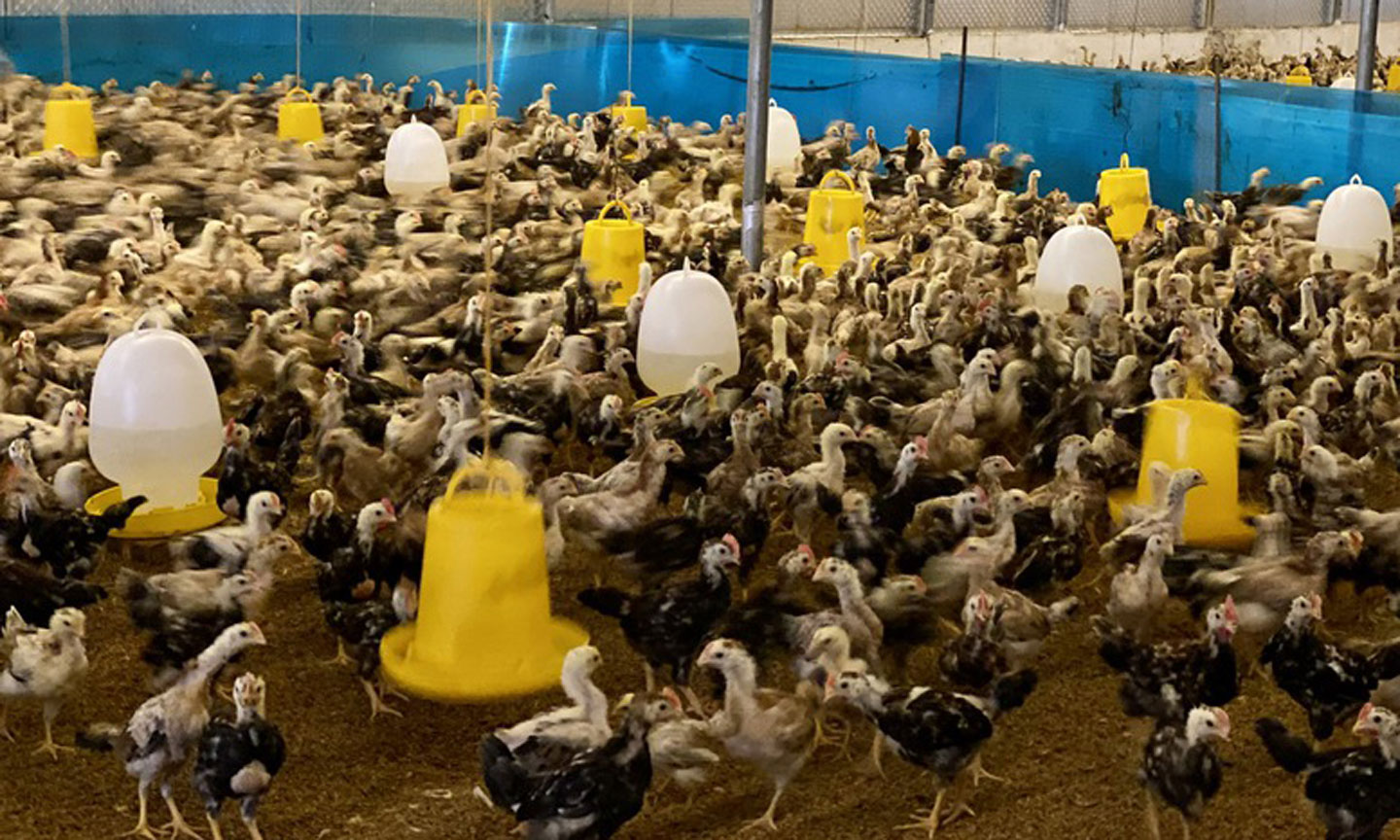 |
| It is projected that poultry meat production will exceed 2.53 million tonnes in 2025 – Photo: VGP/Do Huong |
Target: Over 8.6 Million Tonnes of Liveweight Meat
According to the Department of Livestock Production under the Ministry of Agriculture and Rural Development, in 2025, the livestock sector sets a target for the total production value to increase by about 4–5% compared to 2024. The share of livestock in the overall agriculture sector is estimated to reach 28–30%.
The total liveweight meat output of all types is expected to exceed 8.6 million tonnes (up 4.5%); liveweight pork output is expected to exceed 5.4 million tonnes (up 5%); liveweight poultry output is projected to exceed 2.53 million tonnes (up 4.2%); egg production is estimated at around 21 billion units (up 4%); milk output is expected to exceed 1.25 million tonnes (up 4.8%); honey output is projected at 26,000 tonnes (up 9.2%); and industrial compound animal feed (converted) is expected to exceed 22 million tonnes (up 2.6%).
The year 2024 continued to be a successful year for the livestock sector, with the sector’s value still accounting for more than 26% of agricultural GDP, and livestock production value estimated to have increased by about 5.4% compared to 2023. One of the driving factors was the rising trend of live hog prices and the decrease in animal feed prices, which created motivation for businesses to maintain and further expand production.
Live hog prices surged from VND 52,500/kg to a peak of VND 69,000/kg (an increase of 31.4% year-on-year) in the first half of 2024 due to supply shortages. Afterwards, hog prices dropped to over VND 60,000/kg and have now started to rise again. Live hog prices are expected to continue increasing after the Lunar New Year as demand remains high during the festival season.
Meanwhile, prices of animal feed ingredients in 2024 also decreased compared to the same period the previous year, with corn prices down 15.7%, soybean meal down 10.6%, and extracted rice bran down 7.9%.
According to data from the Ministry of Agriculture and Rural Development, Vietnam’s total liveweight meat output increased by 3.5% compared to 2023, reaching 8.1 million tonnes in 2024, including 5 million tonnes of pork (up 3.7% year-on-year) and 2.4 million tonnes of poultry (up 3.8% year-on-year).
According to the latest data from the United States Department of Agriculture (USDA), Vietnam ranks fourth in pork consumption, with per capita pork consumption estimated at approximately 37 kg per person in 2024. The compound annual growth rate for the period 2024–2026 is about 3.8% per year.
The Food and Agriculture Organization of the United Nations (OECD – FAO) also reported that during the period 2025–2033, demand for beef protein will generally decline and be replaced by poultry meat, while demand for pork protein will continue to rise slightly in low- and lower-middle-income countries.
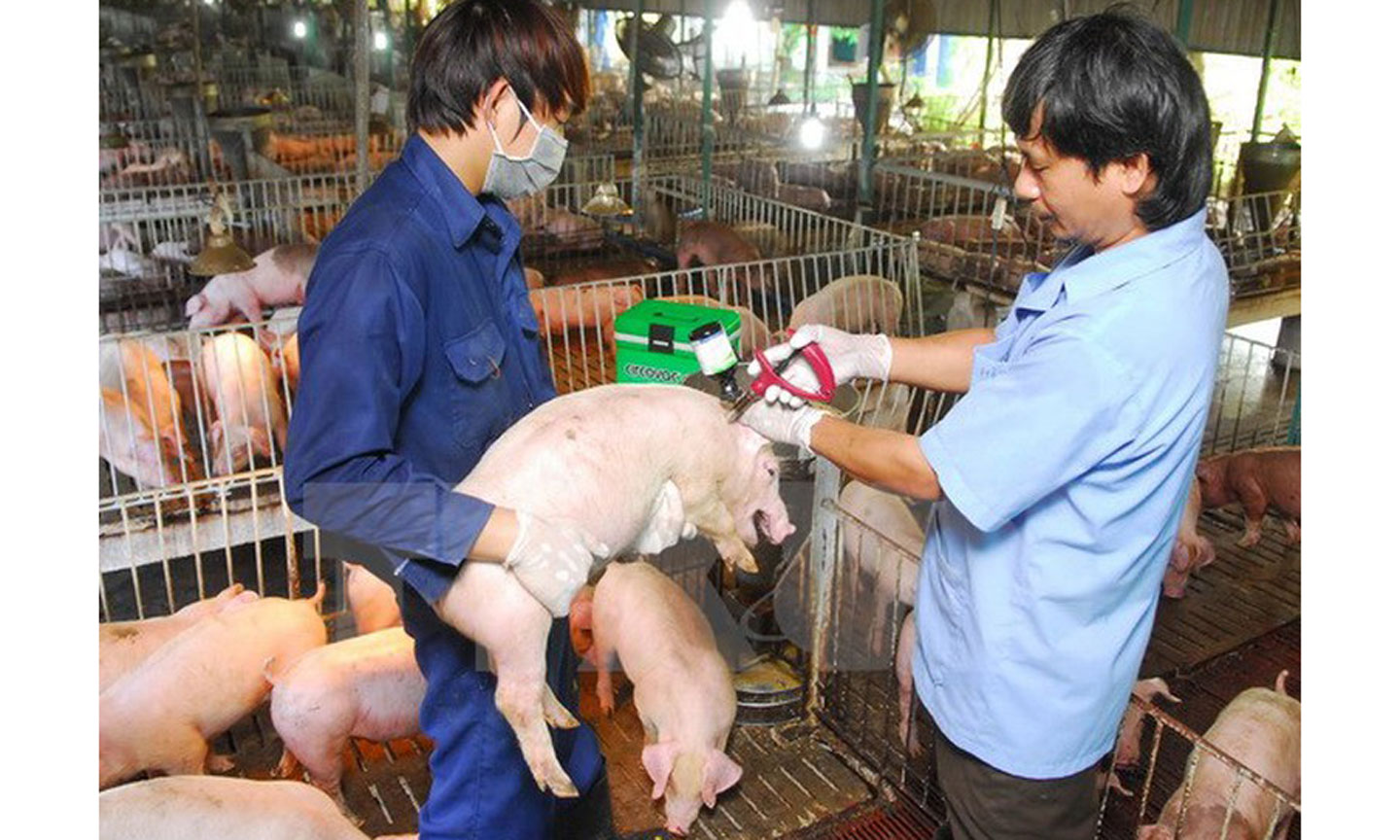 |
| Disease control, livestock product imports, and slaughtering supervision remain major challenges for the livestock sector in 2025. |
Promoting Livestock Sector Reform
The Ministry of Agriculture and Rural Development (MARD) has set targets for the livestock sector in 2025, aiming for a production value growth rate of 4.0–5.0%; liveweight meat output of about 8.4 million tonnes; egg production of 20.2 billion units; milk output of 1.25 million tonnes; and converted industrial animal feed output of 22.05 million tonnes.
However, disease control, livestock product imports, and slaughtering supervision remain major challenges for the livestock sector in 2025. In addition, administrative procedures and regulations in the management of livestock supplies and veterinary services still have many shortcomings, causing difficulties and inconvenience for farmers and enterprises, leading to increased production costs and missed business opportunities.
Deputy Minister of Agriculture and Rural Development Phung Duc Tien stated that in 2025, the livestock sector must focus on responding to climate change, intensifying scientific and technological research, improving the quality of breeds, animal feed, and biosafety.
The Deputy Minister also emphasized the necessity of reviewing inappropriate legal documents, strengthening the handling of violations in fishing and livestock sectors, and promoting vaccination to establish biosecure zones.
Investment in integrated value chains, development of a circular economy, technological innovation, and international cooperation must be prioritized with the aim of attracting more foreign partners, improving brand value, and meeting international standards.
The farm-based livestock model is reshaping Vietnam’s livestock industry, making it increasingly sustainable by reducing the impact of disease outbreaks and fluctuations in feed prices. With advantages in scale, infrastructure, and capital, livestock enterprises can more easily apply advanced technologies in production, helping to lower costs—particularly by reducing feed consumption per kilogram of weight gain, according to the report.
Vietnam’s pork production in 2025 is expected to increase by 3% compared to the previous year, driven by projected herd expansion after overcoming the impact of Typhoon Yagi and improved control of African swine fever.
Pork consumption in Vietnam is forecast to reach about 3.9 million tonnes in 2025, up 3.3% from the previous year, and is projected to hit 4.7 million tonnes by 2030, corresponding to an average annual growth rate of 3.1%.
Analysts also predict that upcoming changes in market supply and demand will accelerate reforms in the livestock sector, as consumers increasingly pay attention to health and food safety issues.
Additionally, rising production costs and complex disease situations will likely reduce small-scale household farming. Meanwhile, the market share of large-scale, closed-loop livestock enterprises continues to rise thanks to advantages in production cost and low loss rates.
Technological innovation will play a crucial role in this transformation. Technology will be applied more widely in the livestock sector to enhance efficiency, particularly in farm-based livestock production.
(Source: baochinhphu.vn)
Original source: baoapbac.vn
